With a background in fitness, I’ve long spoken about building strong bodies. But your body is only half the equation.
The other half? Your mind.
And right now, our minds are being attacked by ruinously addictive technology.
The stats around a loss of attention trend are sobering. Dr. Gloria Mark from UC Irvine has been studying this for over 20 years. Some data from her research (source):
- In 2004, people spent an average of 2.5 minutes on any screen before switching
- By 2012, that dropped to 75 seconds
- Today in 2025, we average just 47 seconds before switching to something else
Your brain has a blueprint for everything that you do. Every time that you start something new, you’re asking your brain to boot up the mental schema for that task.
Did you know that it takes an average of 23 minutes to fully refocus after an interruption?
Energetically, pulling up a blueprint is taxing. Do it too much, too often, and too quickly, and it causes increased stress hormones, higher blood pressure, and brain fog.
We are being attacked. It is weakening us mentally. Which is hurting us physically.
Today I want to share a concept from my new book Unhinged Habits called cognitive snacks. It’s the recovery strategy that I was missing. And I hope it is as useful for you as it has already been for me.
Think of your brain like a muscle . . .
You can’t lift weights nonstop for hours. You need rest between sets.
Your brain is the same way.
Cognitive snacks are the rest intervals of mental work – brief, restorative activities in between bouts of focus.
The stuff people call a waste of time: watching a video, killing zombies, doing Sudoku – all can be quite useful when applied properly.
I’ve found that different people benefit from different types of cognitive snacks. Personally, I like physical ones. You may be different.
Here are the 6 types of cognitive snacks:
1. Physical snacks: Cleaning dishes, light gardening, walking the dog, stretching
2. Nature snacks: Leaning against a tree, watching clouds, listening to birds
3. Analog game snacks: Crosswords, sudoku, puzzles
4. Digital game snacks: Mobile games, scrolling social media (with a timer)
5. Creative microactivity snacks: Doodling, plucking a ukulele, writing a haiku
6. Mindfulness exercise snacks: Deep breathing, body scanning, counting breaths
The key is setting an alarm for 10-20 minutes. Do something rote, automatic, and mindless. Let your mind wander and recover. Then get back to work refreshed.

A bit more for you if you work remotely
The traditional office had natural cognitive snacks built in:
- Walking to the conference room
- Small talk at the water cooler
- The elevator ride
- The commute
Working from home? Your commute is three steps to your desk. Your conference room is a Zoom click away. You must intentionally create these breaks or you’ll burn out.
Here’s a few ideas:
The Meeting Margin Rule: Schedule 25-minute meetings instead of 30, or 50 instead of 60. Use those extra minutes to stand, stretch, and look out a window.
The Fake Commute: Take a 10-15 minute walk every morning before sitting at your desk. This signals to your brain that you’re transitioning into work mode.
Stop grinding yourself into the ground
There is nothing noble about “hustling” if you’re crushing yourself in the process.
It is not a badge of honor to be secretly exhausted, irritable with your kids, or quietly wondering why your success feels so empty.
It’s okay to be tired at the end of the day. What you don’t want to feel is exhaustion. Exhaustion isn’t the result of working harder or longer. You feel exhausted when you switch tasks too much. Working worse, you could say.
I hope this is useful.
-Jon
–
Please consider buying a copy of my brand new book Unhinged Habits. It makes the argument that consistency without seasonal bouts of intensity is ineffective. That, like cardio and weights, we need both.
Dr. Gloria Mark is the researcher whose work is presented here. She is the Chancellor’s Professor Emerita at the University of California. Dr. Mark called Unhinged Habits “A valuable collection of frameworks and actionable steps to help you become more focused, more energized, and less distracted.”
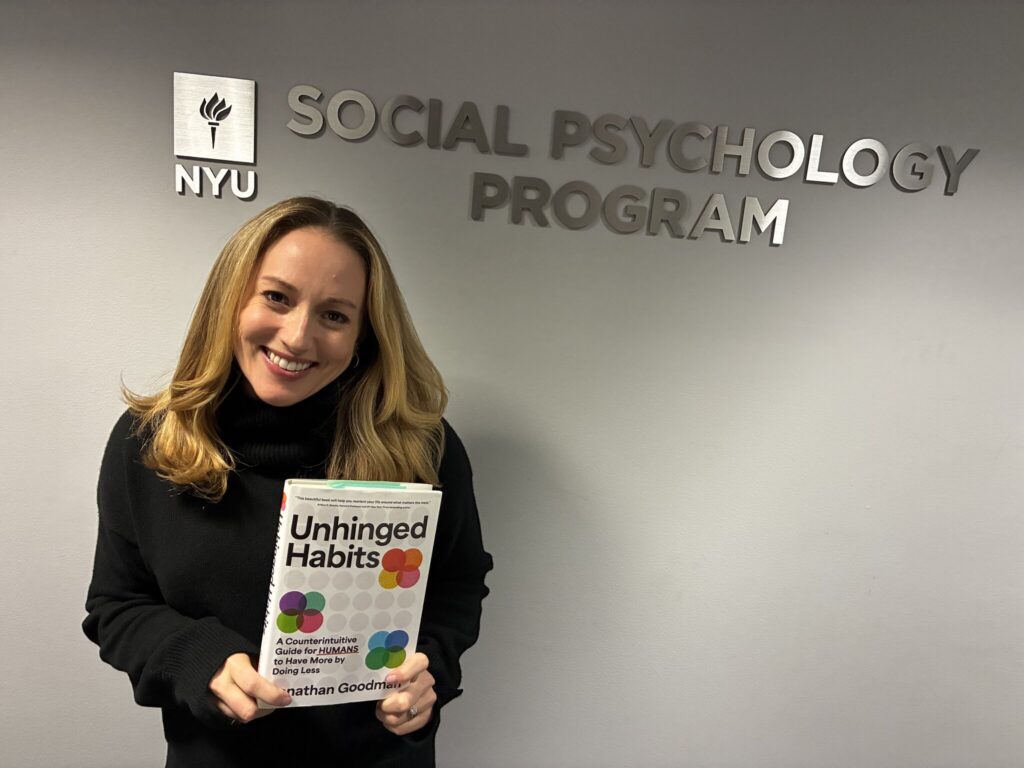
Surprisingly, the book has already become popular in academic circles. Here is Dr. Tessa West, an Associate Professor of Psychology at New York University who said “I love this book. Change isn’t easy and Jonathan doesn’t pretend it is. But he knows what he’s talking about and this book will help you get there.” (Source)
The post The real reason you’re exhausted (+ a fix) appeared first on The PTDC.